Showing posts with label tripod. Show all posts

Tuesday, 9 April 2013

RIP Margaret Thatcher

Margaret Hilda Thatcher, Baroness Thatcher, LG, OM, PC, FRS was a British Conservative Party politician who was Prime Minister of the United Kingdom from 1979 to 1990 and the Leader of the Conservative Party from 1975 to 1990.

Book of condolence at Grantham library

I remember photographing Mrs Thatcher receiving the freedom of the city of London back in May 1989. At the time I was freelancing for some eleven different publications. My remit on this day was to cover it for the City of London Recorder newspaper
 
The press pass that I was issued with allowed me a position right at the back of the ceremonial hall on a balcony about ten meters high with three other 'togs.

Press pass

No flash and no tripods was the order of the day so that meant high film speed. The event was also being covered by television so there was just enough light to get away with using 1600 ISO.

My next problem was the timing. I had to get the images to the newsdesk as soon as possible. In those days I would usually drop off my unexposed films to the various newspaper's darkrooms and have them process and print them up for me. The city of london Recorder was a small publication and didn't have any darkroom facilities. I solved the problem by booking myself some darkroom time at the Photographers Gallery about half a mile from the event itself. Back then, you could hire a communal darkroom for a couple of hours for quite a cheap price and it was quite near to where the event was taking place.

To further save time, I decided to use Ilford XP2 chromogenic film. This was becoming my main black and white film for newspaper use when time was of the essence. Although it was monochrome, it could be developed in C41 chemistry of the type usually used for colour negatives. It also had an extremely wide exposure latitude. In essence, this meant that i could do a job in bright sunlight with my camera meter set at 100 ISO, go to my next job indoors and use 400 ISO and then finish off shooting a floodlit football match at 1600 ISO . . . ALL ON THE SAME ROLL!

So on the day, I turned up early (as I tried always to do) and was shown to the small balcony that I'd be sharing with my three colleagues representing her majesty's press. I could see why tripods weren't allowed. There was barely room to stand. As I was first to arrive, I blagged the position by the railing.

Soon after, my three companions arrived and began complaining about the space allotted to us. I didn't mind because I was in front :o)

Then the ceremony began and we noticed another problem. Mrs Thatcher was wearing a wide brimmed hat. From our vantage point at the back of the building and from ten meters high, we could only see her chin! 

This meant that we had to constantly look through the viewfinder and be ready to fire off a burst when she glanced up. I was using my canon T90 coupled with a 300 mm f4 telephoto lens which was ideal. As a form of insurance I took photos of the other dignitaries in the audience in case I wasn't able to get an image of the lady herself.

In the event, I shot a full 36 roll and only got her face on three exposures but this was enough for me. When the ceremony ended, I took off to the nearest photolab and had my negatives processed. From there I ran to the Photographers Gallery and ran off five or six, ten by eight enlargements which I delivered to the editor two hours after the event and well before deadline.


Both images. Canon T90 EF 300mm f4
1/125sec @ f4 1600 ISO


 This was used large in the 'paper

So that was my small experience photographing "The Iron Lady". As I heard someone on the television this morning, "Like her or loathe her, she won't be forgotten. "

Thanks for reading.


Monday, 25 February 2013

Progress photography

Before and after. Seven months passed

One of the services I offer to construction companies is that of progress photography.

Whether the images are needed for the design team, the architects, the insurance companies or simply as a record of what is happening on site, progress photography can be invaluable and is something I enjoy doing.

From November 2009 until May 2010 I documented the building work going on at a large supermarket project in Basel. 

My brief was simply to cover as much as the work as possible from as many different angles.

I was lucky enough the be working with a team who knew exactly what they wanted. I took a walk around the building site and we discussed the various viewpoints needed. These viewpoints were then transferred onto a technical drawing of the site.


Thirteen shooting positions

I had the idea to do a time-lapse of the project but this unfortunately not doable. Instead I resolved to use the same focal length for every position on the same camera body at the same height on my Benbo tripod. I also made notes reminding me of where exactly the camera was aiming. Before each shoot, which at the beginning took place every three weeks, I would print out the pictures from the last shoot to help me visually to place the camera.

Although I had thirteen viewpoints, I eventually settled for ten or so towards the end of the project. This was for two reasons. Firstly, new obstacles such as counters or walls would appear where there was previously nothing and secondly some of the viewpoints overlapped and didn't offer anything new.

Images were always mailed to the clients after every shoot together with a Powerpoint presentation. At the end of the project another Powerpoint was made showing all the progress made from the beginning to the end.

For myself, I made a couple of small movies from the still images to show to future clients. Here's the first.


.. and here's the second


Feel free to leave some comments and thanks for reading. 


Monday, 3 December 2012

Christmas lights

My friend , lighting designer Renato De Toffol was awarded the contract to design and set up the Christmas lights for the city of Olten near where I live.

The lights are beautifully designed and consist of "curtains" of fairy lights and large translucent balls which project stars onto nearby surfaces.

It was bitterly cold when I was photographing the lights and once or twice my 5D MkII wouldn't respond. This was solved by removing the battery from the camera and keeping it in my jacket for a while to warm up.

My son Thomas accompanied me and I learnt that he has a great eye for potential pictures. He would go off and scout a new location while I photographed the current one.


This is a photo that Thomas took of me standing on a dumpster after he suggested that the image would be better if I had a higher viewpoint.


This is the image that resulted. he was right  :)

Overnight after shooting the images it snowed quite heavily and I thought that it would be a good idea to retake some of the better viewpoints with snow in them.

Unfortunately most of the snow had gone and some of it had turned to slush by the time darkness came, so I was only able to retake a few images using the wet streets for reflections.

One of my favourite images from the night is of a water fountain. I decided to play around with it in photoshop. I took two images with all the same settings. One image was sharp and the other deliberately out of focus.


Both images 2.5 sec @ f11

In Photoshop, I overlaid the blurred image on top of the sharp one. Then I used the standard ersaer tool to "wipe away" the unsharpness on the figure of the lady. I quite like the effect.

The result 

You can see a few more from this shoot over on Renato's website here.

What do you think?

As ever. Thanks for reading and please leave a comment.


Thursday, 17 February 2011

Grossmünster Church Zürich

Had an interesting job last week.

My friend, the Swiss lighting designer Renato M de Toffol has made a new installation in the Grossmünster church in Zürich.

It is programmable according to whatever event is happening in the church and the lighting changes accordingly.

I spent from one thirty in the afternoon until about seven in the evening documenting the different moods available.

The crypt

I photographed everywhere from the crypt to the outside where it is also illuminated.

The pictures will shortly be appearing on his website but in the meantime, I experimented with HDR which was necessary to provide details from the highlights to the shadows.

Here's some of the results.

Stained glass window by Giacometti

The choir seats


Loved this old door with the massive lock
 

Dusk is starting outside the church


On my way back to my car, I stopped to take a picture 
across the Limmatt river.

That's it for now. Thanks for reading


Thursday, 21 October 2010

62 degrees!!

An interesting problem presented itself last week when I was on location in the small town / village of Horn on the shore of lake Constance.

My brief was to photograph the Spa area of a luxurious hotel. The spa area has recently undergone a complete refurbishment and my friend, the lighting designer, Renato De Toffol, asked me to provide images of the finished lighting.

I arrived early and scouted the location which comprised indoor pool with a lake view, a sauna and a massage area. Due to the fact that the whole complex was still in use, I had to wait until ten in the evening to begin shooting to ensure that all the guests had gone.

After a meal in the restaurant, I collected my gear from the car and bought it inside. I attached my 17 - 40 zoom to a 5d body and entered the pool area. Condensation formed all over the camera and lens immediately due to the warm humid temperature in the pool area compared to the outside.


I didn't want to wipe the lens with a cloth in case it left smear marks.  Normally, I would have left it in the pool area to acclimatise but there was no time. The cleaning crew were anxious to begin work and there was lots to photograph.

Seeing an open fire nearby, I had an idea. I held the camera pointing lens first at the flames from about 50 cm (about 19 inches)away. After about three and a half minutes, the lens had cleared and I could start shooting.


The pool area with fire

After the pool area we moved to the sauna area. I opened the door of the main sauna and a wave of very hot and dry air hit me. I looked at the LED temperature readout on the wall. It was 80 degrees. That's 176 degrees Fahrenheit!!

As I was still dressed in jeans and a T-Shirt, I decided to cool the room a little before beginning my shoot. I tried opening and closing the door to try and "waft" the air out, but the building manager came and told me not to as it would trigger the fire alarms. The temperature was now somewhat "cooler" at 62 degrees. That's 143 fahrenheit.   :o)

 Somewhat warm

There was no other option but to go in and work through the heat. I set up my tripod and the sweat immediately began running down my back, my legs and dripped off my nose. The lighting in the sauna was quite dim and it was a struggle to focus. Even the built in autofocus was finding it difficult. Eventually I found that an exposure time of 13 seconds at f13 was just about right for the conditions with the ISO set at 400.

 The finished image. 13 sec at f13 at 62 degrees.


When I finished the sauna shoot my clothes were wet through and luckily that was the end of the shoot and I could get myself back to my hotel for a shower and a well earned sleep.

Friday, 24 September 2010

Photography in the evening

T'was a full day of photography yesterday.

I spent the morning photographing a new lighting set up at Zaugg AG, a large construction company based in Rohrbach.

The afternoon and evening were spent about 10 kilometers (six miles) away surprisingly enough, in a another construction firm also with new premises by the name of Koenig.

Of particular importance to us was the exterior lighting provided by the company for whom I work, Regent lighting.

Dusk is the best time to photograph "night time" images as you sill get detail in the sky. Unfortunately, you only have about 20 minutes to a half an hour before it gets completely black and featureless.

Luckily, darkness is coming earlier as we draw towards the end of the year and that meant that dusk (or Dämmerung as it's called in German) is earlier. I took some twilight photos for Regent earlier this year and had to wait until a quarter to ten for it to start to get dark. Last night I began at a quarter to eight.

Luckily I have a standard exposure which I use for twilight shots. I set the exposure to 2.5 seconds at f10 and bracket one and a half f/stops each side. Then I combine all three later into a HDR which I DON'T (most of the time) Tone-Map.

Here's a picture I took of my EOS 5 on the tripod. I used my new Samsung Galaxy phone to test it^s night time capabilities.

 Taken with the Samsung Galaxy

This image however is the finished HDR picture.

Taken at 20:04 in the evening

 That's it for now. Have a great weekend.

Tom


Friday, 18 June 2010

These are a few of my favourite things...

No this entry isn't going to be  about that song from "the Sound of Music"

Rather, I'm going to list some of the items that always have a place in my camera bag.

Let's start with the bag itself. Mine is a Billingham Classic 550. I bought it in the mid eighties when I was doing freelance press photography in London. I noticed that just about every other photographer I came across was using one. I stumped up (I think) £107 and bought one from Jessops in Tottenham Court Road in London. It's a heavy beast, even when it's empty!


Billingham Classic 550. Pic courtesy of Billingham bags

Weighing in at 2.6 Kilograms. It's the bag that I put in my car and just take stuff out of it as I need it. At the moment it holds an EOS 5d, an EOS 7d plus grip, a 70 - 200 zoom, a 28 - 135 zoom, a 17 - 40 zoom, a 50mm f1.8, a 24mm f2.8, a 16mm fisheye, a Canon Speedlite 420 EX plus two external drives, cables, card readers, cleaning cloth, batteries, memory cards and miscellaneous other items. The total weight of all these items together with the bag is 11 kilograms.Wash it occasionally with warm soapy water and treat it afterwards with a weatherproofing spray and it'll last for years.

Sto Fen bounce flash adaptor


Next is my Sto Fen flash bounce adaptor. Again I bought this in the eighties after seeing other snappers using them on jobs whilst working in London. It fits in the pocket and softens the flash light output. It's also useful for when there are dark or coloured ceilings which may influence the colour balance (remember I got this in the days before I could dial in my white balance).


Hotshoe spirit level

This is a little spirit level that I use to ensure that my shots are correctly aligned when shooting architecture. The little bubbles show if the camera is tilted up or down and whether it's correctly positioned with regards to a left or right tilt. My new EOS 7d has an electronic level built in which was actually one of the plus points that I considered when purchasing it.

 Panamatic panorama adaptor


The Panamatic camera adaptor has a built in spirit level and enables me to shoot a seies of photos one after another which can be later "stitched" together to make a panorama.

I bought both the panorama head and the spirit level from 7dayshop but they don't appear to list them anymore. They do however have an electronic level.

My Benbo tripod has been with me since June 1988. I've taken it everywhere with me. It can adapt to any uneven terrain and the legs are waterproof up to the first section. It looks unusual (even after all these years but I wouldn't be without mine.)

Vapor 1640 by Ken Onion

I always carry a knife with me and use it almost daily. There's always packing to cut open, an apple to peel or wires to cut and my 1640 VAPOR from Ken Onion does all of these and more. Looks nice too!


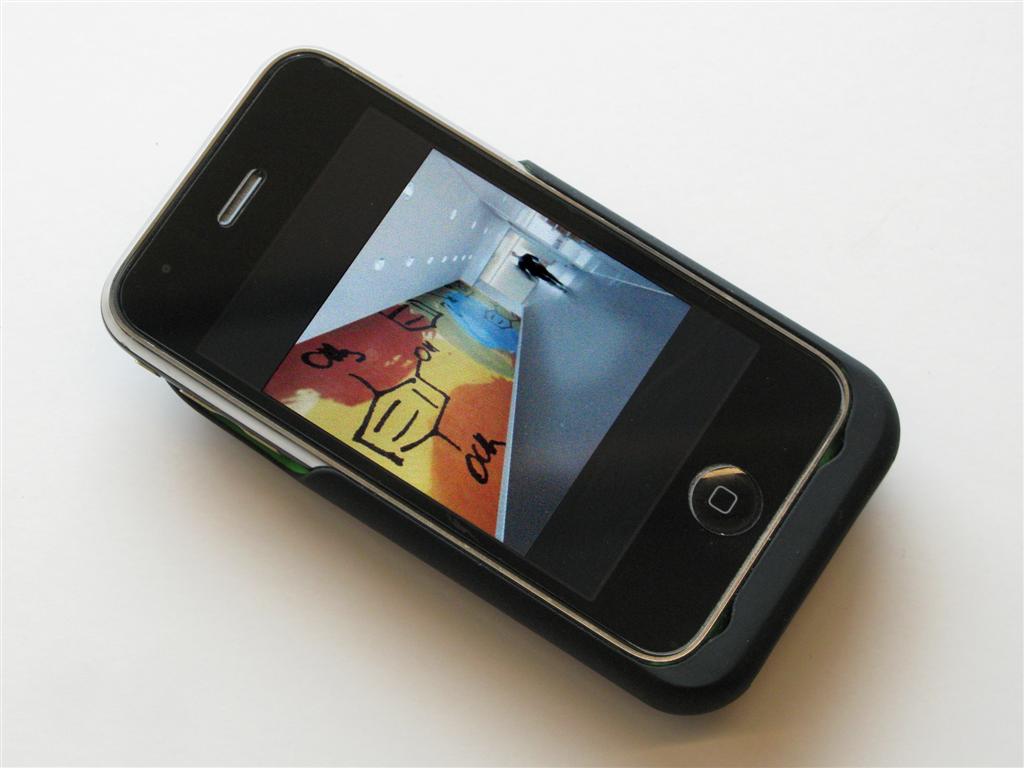
The ubiquitous iPhone

Last but not least is my iPhone. There are lots of photography Apps available for this. I use the Swiss tourist board programme to find out if anything photogenic is happening near me. I use another programme to calculate depth of field when shooting close-ups. A sunset / sunrise programme helps me know the best times to photograph according to where the sun is at any particular time of the day. The sunset part of the programme also lets me know when it's best to take pictures "at night" (Dusk is the best time as there is roughly a half an hour of magical light when details are visible in the sky which isn't too dark)

One cool thing about the iPhone is that when I open a picture in Irfanview, it shows me the GPS co-ordinates. This is useful when I'm out and about for the day and take pictures in different locations. I simply take one snap with the iPhone at each location. When I get back home, I simply open the image in Irfanview and can see where it was taken. I use this a lot when doing stuff for Google Earth.


Well that's it for now. It's the weekend and I'm off to take some pics.