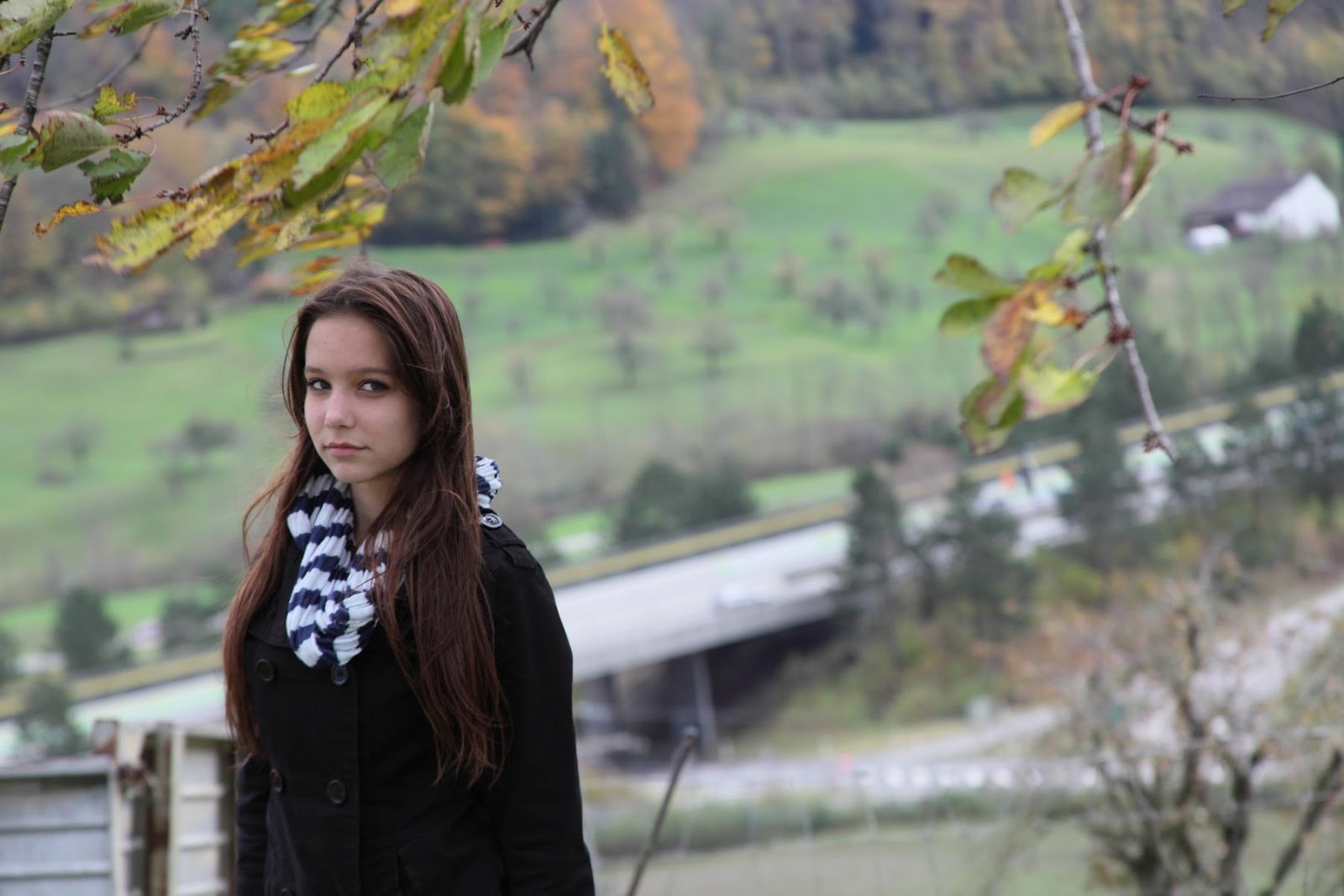
I picked up a lens last week that I've been thinking about for a very long time.
I wasn't one hundred percent happy with the 28 - 135 that I've been using for the last six years or so. As I mentioned in the previous post, I rarely take pictures beyond the 70 mm setting.
My "new" lens is the formidable Canon EF 24 - 105 f4 IS L lens. It will complement my 70 - 200 nicely (although as I also mentioned previously, I last used that particular optic last year).
The lens itself is in almost mint condition and was well cared for by its previous owner.
I've now semi retired the 28 - 135 and the new lens has taken it's place as my "carry around" lens for when I need a bit more than the 50mm f1.4 can give me.
Here's my current line-up minus cables, battery packs and other assorted paraphernalia.
Thanks for reading.
Showing posts with label 28-135. Show all posts
Wednesday, 21 November 2012
Monday, 5 November 2012
Unplanned photo class
I went out for a walk on Sunday to try and catch some Autumn colours but things didn't go quite as planned.
Accompanying me and my wife and son were a friend and her twin daughters.
I was travelling light and only had an EOS 5d MKII coupled with a 28 - 135 lens.
Lera takes aim at Jeniya
The resulting image
Lera then handed the camera over to her sister, who before I could say a word proceeded to take some pictures of her sister. This continued with the girls snapping away at each other and striking various poses.
Now it's Jeniya's turn
Jeniya's portrait of Lera
They stopped after a few minutes and reviewed the images. The questions came thick and fast:
Reviewing the images
"Why is she not sharp?", "How can I make the background look soft?", "How can I delete that one?" "Why is it too dark / too light?".
I tried to answer as best I could in a non technical way and was surprised at how readily the twins absorbed the information. After each clarification, one of them would start taking a few pictures and eventually they would master that little bit of technique. The most difficult proved to be the focus lock, although that only took about five minutes (and maybe ten attempts) for them to master. After about forty five minutes, I had given up on taking pictures for myself and let the girls have free rein. With the basic techniques mastered, they snapped happily away for the next hour or so.
My pic safely onboard, I handed the camera back and let them get on with it.
Here are some of the girls' images.
Jeniya by Lera:
Lera shoots Jeniya
Two hundred and twenty six images later I was sat back on my PC for the download process. The girls had done well. Of
the 226 images, 27 were rejected due to being unsharp. These were mainly from early in the day when the girls were getting to grips with the (admittedly heavy) camera.
I learnt three things that day:
- Switch off the continuous shooting mode. The girls don't need two or three nearly identical images.
- Shoot RAW and JPG. Editing a couple of hundred images from RAW is time consuming and many of the images didn't need anything else done to them.
- Take a spare camera for myself next time!
Luckily I had my Samsung with
me to record the day!
Thanks for reading.
Labels:
28-135,
class,
Diegten,
Eos 5d mark 2,
Jeniya,
learn,
Lera,
photography
Tuesday, 2 October 2012
Out of the comfort zone.
For the last ten years I was doing 90% of my photographic work in the studio.
Using slow reversal film at 64 ISO , I worked with a medium format camera locked down on a FOBA studio tripod which wouldn't budge one millimetre even if you rugby tackled it.
The four lenses that I used were the EF 17 - 40, EF 28-135 IS, EF 24mm f2.8 and the EF 50mm f1.4
I started off by photographing every speaker from beside the stage with my 50mm lens.
Luckily, the first speaker was wearing an outfit that was nearly 18% grey. I spot metered off the jacket and used that reading on the subsequent images of speakers in the same place.
For these two shots I waited until the speaker was stationary and not moving his arms etc because the speed was very low. The camera was supported on a G-clamp resting on a table.
All in all a quick easy job that was done without flash. Maybe next time I'll be brave enough to set the speed a little bit higher :o)
Thanks for reading.
Using slow reversal film at 64 ISO , I worked with a medium format camera locked down on a FOBA studio tripod which wouldn't budge one millimetre even if you rugby tackled it.
Foba studio stand
The finished results were intended for brochures, adverts and the internet etc.
I think that the fastest film I had used during that time was rated at ISO 200.
This had to change when I took some pictures at a seminar. The event was held in a former church which had very high ceilings so therefore no bounce flash. Also I didn't want to distract the speakers and the audience with my strobes.
I knew that my Eos 7d and my EOS 5d MKII have good low light capabilities so I decided to shoot at 800 ISO. Not very high, you might think but remember that my previous high ISO exploits were in the UK, over twenty years ago, when I was shooting football in Winter with my camera set at 1600 ISO before half-time and 3200 in the second half. The results which were used in the newspaper were undoubtedly grainy.
Thoughts like this were in the back of my mind when I decided to shoot at a measly 800 ISO for the seminar.
The four lenses that I used were the EF 17 - 40, EF 28-135 IS, EF 24mm f2.8 and the EF 50mm f1.4
I started off by photographing every speaker from beside the stage with my 50mm lens.
Luckily, the first speaker was wearing an outfit that was nearly 18% grey. I spot metered off the jacket and used that reading on the subsequent images of speakers in the same place.
EOS 7d. EF 50mm f1.4. 1/50sec @ f4. 800 ISO
The crop factor when using the 50mm lens on the 7d meant that it was in effect an 80mm lens
EOS 5d MKII. EF 28-135 IS
1/6 sec@ f5.6. 800 ISO
EOS 5d MKII. EF 24mm f2.8.
1/12 sec@ f4. 800 ISO
EOS 5d MKII. EF 24mm f2.8.
1/13sec@f5. 800 ISO
EOS 5d MKII. EF 24mm f2.8.
1/15sec@f4.5. 800 ISO
EOS 5d MKII. EF 24mm f2.8.
1/40sec@f3.2. 800 ISO
Then it was back to the office to convert the RAW data. My standard method is just to correct the white balance, sharpen the final JPG and correct any lens aberrations . These are all done in Canon's own DPP software.
Before and after of the DPP window
All in all a quick easy job that was done without flash. Maybe next time I'll be brave enough to set the speed a little bit higher :o)
Thanks for reading.
Labels:
2012,
24mm f2.8,
28-135,
5dmkII,
800 ISO,
available light,
Basel,
Digital Photo Professional,
DPP,
eos 7d,
Flash,
tom waugh
Friday, 2 December 2011
Extasia 2011. Switzerland gets naughty.
I’ve already mentioned and written about the annual Streetparade but there is one other event which also attracts visitors from afar and that’s the Extasia.
Extasia is Switzerland’s answer to the Venus erotic fair in Germany although on a smaller scale.
The event used to be held in Zürich but moved a few years ago to Basel next to the football stadium near where I work.
The event is always covered in the press in the week’s preceding. This year’s coverage centred on the fact that a religious group would be holding a prayer vigil outside the hall. This no doubt generated free publicity.
I turned up shortly after opening time and bagged myself a position beside the main stage. Looking around me I saw lots of expensive DSLR’s and of course the ubiquitous camera-phones everywhere.
Hands up if you own a camera-phone
I had the EOS 5d MKII with a 17 – 40 zoom for anything that might happen right next to me and an EOS 7d with a 28 – 135 zoom to handle the performances that happened a bit further away. Both cameras had flashes fitted.
One 8Gb card gone already
Here are some of my photographic impressions from the night. Of course there was lots of nudity but I’m only putting the tamer stuff here.
Thanks for reading.
Labels:
17 - 40,
28-135,
Basel,
eos 5D Mark II,
eos 7d,
erotic,
erotic fair,
erotik,
erotikmesse
Tuesday, 30 August 2011
200@f13
Due to difficulties in getting a passport for our little one this year, we decided to take our holiday in Switzerland.
I've travelled lots in this country due to my job but have rarely have I ventured into the Italian region known as Tessin. We booked a week's stay in a guest house in the village of Vellano. From here we had easy access to the major cities of Lugano, Locarno and Bellinzona.
Vellano is a tiny village of stone houses and bumpy streets. It is accessible by winding mountain roads and has stunning views of the mountains.
View from the hotel window
Typical street in Vellano
The big cities hold very little interest to me photographically except perhaps for Bellinzona which has three castles and a massive city wall that you can explore both inside and out.
In Lugano, I only took one small series of photos. These were of a typical (to me anyway) Italian style delicatessen.
Italian Deli in Lugano
More of interest to me personally were the old villages, churches and stunning scenery which abound in Tessin. I love old world / mediaeval scenery and buildings and in Tessin, I was amply rewarded.
Not really knowing what to expect, I took the following gear with me:
Eos 5d
Eos 7d
16mm fisheye
50mm f1.8
17 - 40 zoom
28 - 135 IS
70 - 200
420 EX II Speedlite
Benbo tripod
G-clamp mini tripod
This stuff weighed a ton and my back started hurting me.
At the end of the third day, I was looking at my images and realised that the vast majority were taken with the EOS 5d and the 17 - 40.
For the rest of the holiday I left all the other stuff out of sight in the boot of the car and only took this combination together with the Speedlite and the mini G-clamp tripod with me in a small
rucksack. My back feels normal again.
You've probably read this far and are wondering why this blog entry is titled "200@f13". The reason is this. The weather in Tessin was beautiful. Blue skies and lots of sun. When I have these conditions, I always set my camera to 200 ISO with the settings at... you've guessed it, 1/200 sec @ f13. Later when I am converting the RAW data I can select all images taken with this setting and apply the same small corrections to all of them. Normally the settings are a tweak of the highlight control to bring out any white puffy clouds and maybe a nudge of the shadow control to prevent the shadows going too black when I've been shooting in the midday overhead sun.
That's the technical bit done. If you ever have the opportunity to visit Tessin, I would heartily recommend the following places to visit or take pictures:
If you want to see any more of the images that I took, you can check out this link which shows the ones that will be included in Google Earth
There are of course many more places to see, explore and photograph and I know for certain that I'll be returning.
Thanks for reading.
Labels:
16mm,
17 - 40,
28-135,
70 - 200 f4,
Bellinzona,
Benbo,
holidays,
Tessin,
tom waugh
Subscribe to:
Posts (Atom)